Brain Dump
Value Creation in Service Design
2025
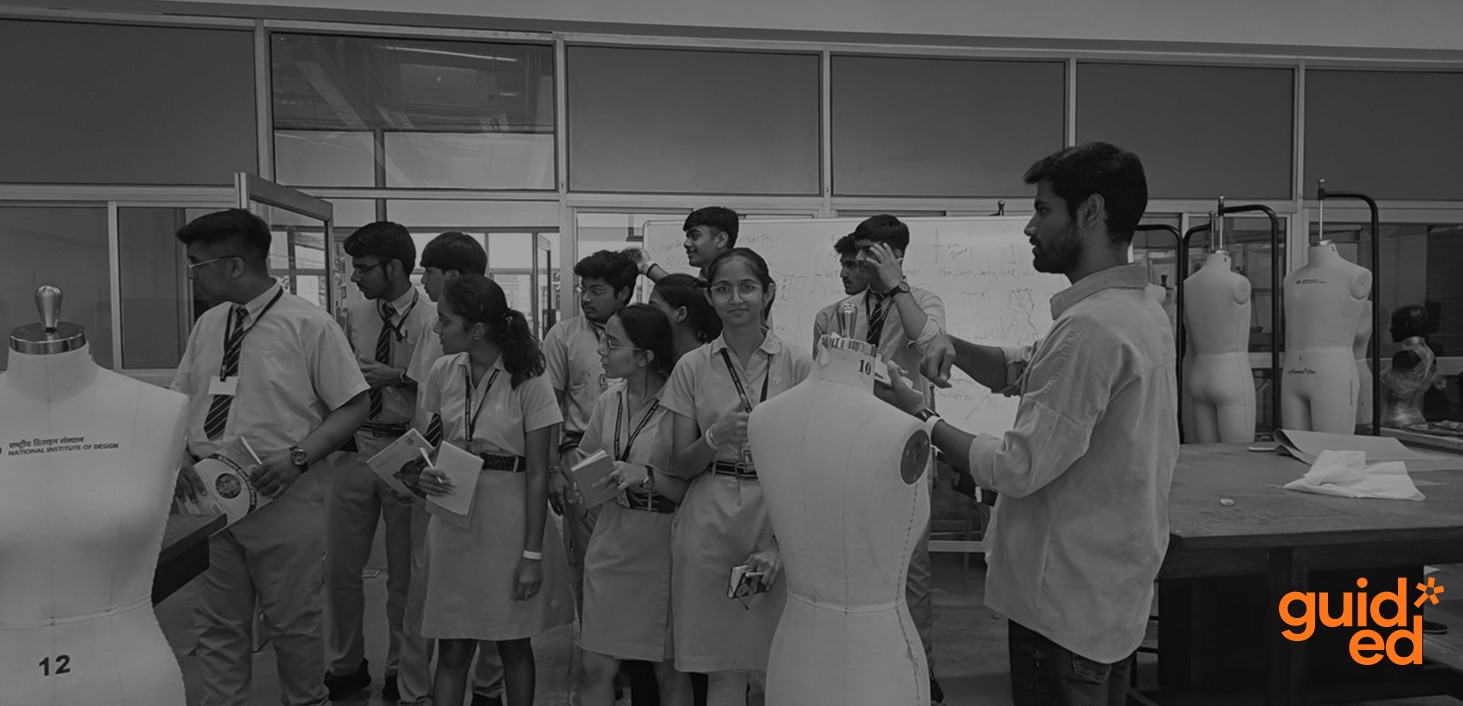
The understanding of service design usually begins with the belief that services are systems built to deliver efficiency, consistency, and satisfaction. At first, the work often revolves around mapping processes, defining user journeys, and reducing friction points.Through practice, this perspective starts to shift. Services reveal themselves as living systems, influenced not only by design logic but also by the emotions, expectations, and contexts of the people involved.
Over time, it becomes clear that effective service design is less about controlling outcomes and more about creating conditions where meaningful experiences can naturally emerge. Users rarely follow neatly planned paths; they interpret and adapt the service based on what feels right for them. For example, during early user tests, students often skipped the reflection forms and instead shared their thoughts directly with their guides, revealing that trust and personal connection mattered more to them than the formal process we had planned.
Designing for Transitions
A service is not just a delivery mechanism; it supports transitions: from confusion to clarity, hesitation to confidence, and isolation to connection. Each touchpoint shapes how people make sense of their journey, both practically and emotionally. While efficiency and structure matter, emotional coherence ultimately determines whether an experience truly works. When people feel guided and understood, the service becomes more than functional, it becomes relational. Designing for such transitions requires empathy alongside process discipline, with the real challenge lying in keeping the system adaptable without compromising trust. This became evident while working on Guided, a service designed to help students gain clarity in an environment overloaded with information. One tour prototype illustrated this beautifully: a student who arrived uncertain about her future choices left reassured after a conversation with a student guide who had once pivoted careers after graduation, turning what could have been an evaluation into a moment of connection and confidence.
Learning through prototyping
While frameworks suggest ideal flows, real users often improvise, skip steps, or create their own shortcuts, revealing how flexible services need to be to accommodate lived behavior. In Guided, this learning became especially visible: the system connected students, college guides, and institutions through shared experiences and ongoing feedback. What began as a structured matchmaking model gradually evolved into a collaborative network. For instance, although scheduling was initially intended to happen through a Google Form, many students preferred using WhatsApp because it felt quicker and more personal. These small deviations demonstrated that formality doesn’t always equate to usability and that responsiveness often matters more. Each iteration of the service reflected this balance between structure and spontaneity, making the system progressively more human, coherent, and empathetic.
Challenges as Catalysts
One of the most revealing parts of service design was realizing how differently systems look from inside and outside. While internal teams tend to focus on efficiency, users experience the same system through emotion and effort.
In Guided, this difference showed up clearly between stakeholders — student guides, students, and partner institutions. Each saw only their own slice of the journey, which led to misaligned expectations and inconsistent experiences. For example, student guides initially expected to follow strict scripts during campus tours, while students valued free-flowing conversations. Updating the onboarding materials to encourage storytelling rather than rehearsed speech helped bridge this gap and align intent with experience.
This process highlighted that coordination is not only operational, it can be emotional. The service began to function more smoothly once each participant could see how their contribution shaped the larger whole. When people understand how their work connects to others’ experiences, collaboration becomes more valuable.

Innovation in service
One key realization was that peer relatability often held more power than expert authority. Students trusted guides who had recently gone through similar experiences more than they did official representatives. This shifted the design approach toward authenticity and shared experience rather than hierarchy.
Introducing micro-feedback loops after each guided session was another small but meaningful step. These structured reflections enabled both students and guides to exchange feedback and refine their interactions. Over time, this evolved into a simple measurement tool, that helps Guided to evolve and adapt to user needs.
Personalization emerged as the next layer of refinement. Adaptive pairing tools and AI-assisted matching were introduced as enablers of easing decision making. Each design decision, tested and refined, helped in reducing mismatches and uncertainty. This helped service slowly grow into a more responsive system.
Over time, the understanding of value itself evolved. The purpose of a service was not merely to deliver value to users but to enable them to create it through their own participation. In the case of Guided, students were not passive recipients of information; they were shaping their own clarity and direction through conversation, reflection, and comparison.
This shift mirrors what is often seen in services like IKEA, where customers assemble their own furniture:not because it’s easier, but because participation deepens their sense of ownership and satisfaction. In the same way, when students engaged directly with guides, the act of exploring and questioning became part of how they made sense of their choices. Here, choice architecture played a subtle but important role: the service was designed to frame options, prompts, and interactions in ways that encouraged autonomy rather than prescription. Students were nudged to reflect, compare, and articulate what mattered most to them, without feeling steered toward a specific decision.
Guides gradually transitioned from information providers to facilitators of perspective. Storytelling replaced instruction, allowing students to draw their own conclusions. Even when a student decided a particular college wasn’t the right fit, the outcome was still considered successful because the service had fulfilled its deeper purpose—helping them arrive at clarity. This reinforced a wider principle in service design: success is not about directing users toward predetermined outcomes but about crafting environments and choice architectures where people can make confident, self-aligned decisions.